 A Letter Worth Reading
Plan · 3 min read
Choosing a frequency you can keep
Weekly sounds keen and monthly sounds calm. The right rhythm is the one you can still keep next year, and a simple calendar makes it stick.
How often you send matters less than whether you keep your word.
The short version
- Pick a rhythm you can keep for a whole year, not just a good month.
- Tell people the rhythm when they sign up, then stick to it.
- Too much mail drives people away. Too little and they forget you.
- A simple calendar and a list of spare ideas keep you on time.
A rhythm is a promise
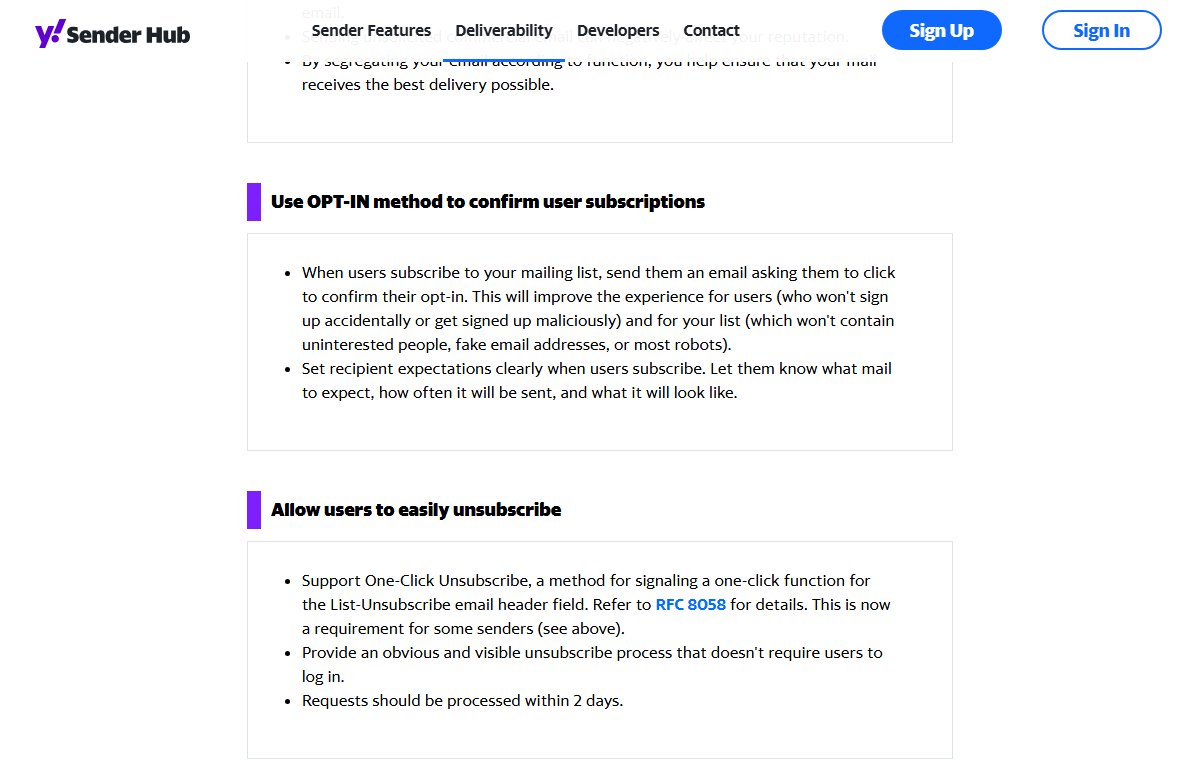
When someone signs up, they agree to hear from you. They should know how often. Yahoo asks senders to tell new subscribers what mail to expect and how often it will come.[1]
Once you say it, it becomes a promise. If you say "monthly", send monthly. A letter that turns up when you said it would feels like a friend keeping their word.
We think a steady small letter beats a big one that comes and goes. Readers build a habit around the first. They lose track of the second.
Weekly, monthly or seasonal
There is no right answer for every business. But there is a right answer for yours. It depends on how much you have to say and how much time you have.
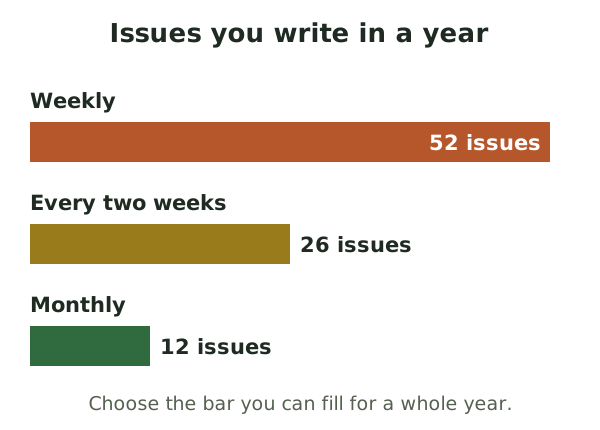
- Weekly suits a business with fresh news each week. A café with a weekly menu is one example. It is a lot of writing, so be honest about the time.
- Every two weeks is a middle path. It keeps you in mind without filling the inbox.
- Monthly suits most small teams. There is time to make each issue good.
- Seasonal suits a business that changes with the seasons. A garden shop might send four letters a year, one per season.
Our advice is to start slower than you think. It is easy to send more often later. Going the other way feels like a step back.
Too much, or too little
Sending too much has a cost. Piles of marketing mail can annoy people. Some will unsubscribe, and some will start to dislike the brand.[2]
Sending too little has a cost too. If months go by, people forget they signed up. Your next letter then feels like a stranger at the door.
Steady also helps your mail arrive. Google advises senders without a history of large sends to avoid sudden jumps in volume.[3] So don't go quiet for half a year and then send three letters in a week.
Plan with a simple calendar
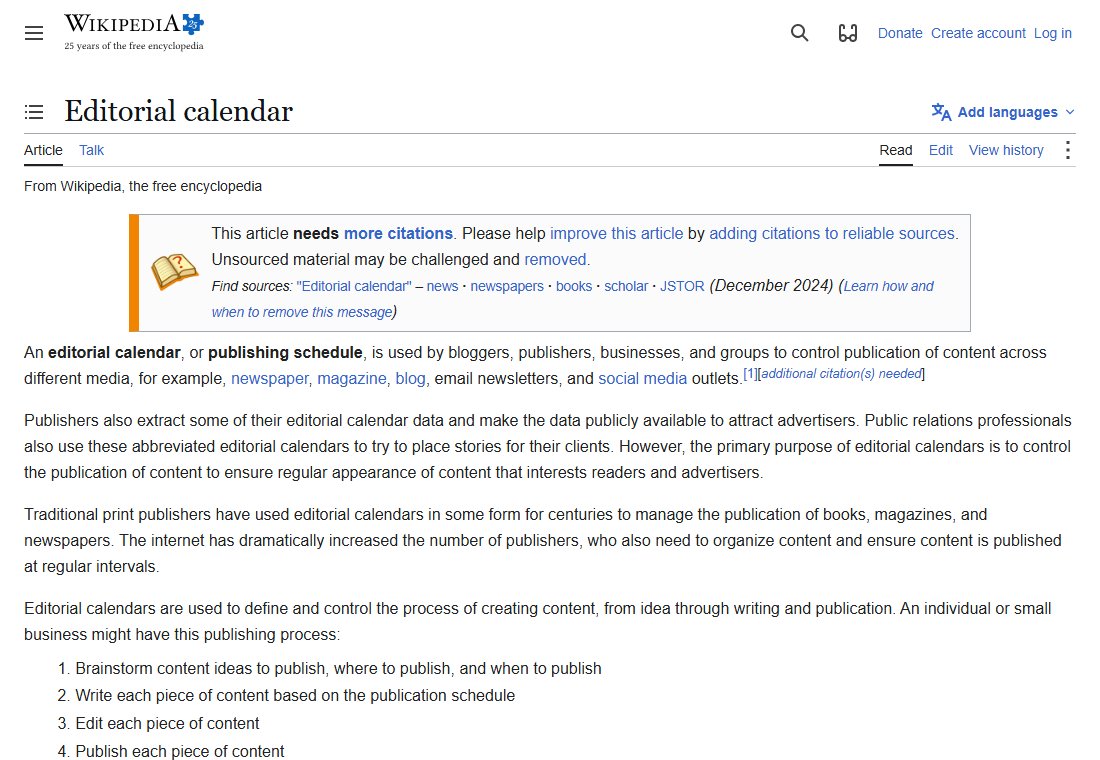
An editorial calendar is a plan of what you will publish and when. Newspapers, blogs and email newsletters all use them.[4] Its main job is to make good content appear at regular times.[4]
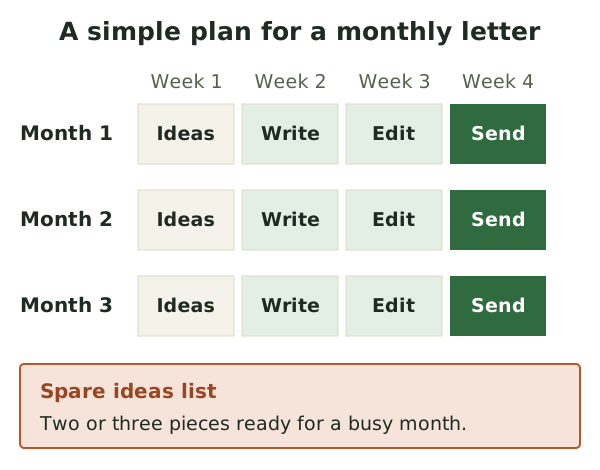
For a small business, the steps can be very simple.[4] Think of ideas. Write each piece. Edit it. Send it.
Here is how that looks for a monthly letter. Each week of the month has one task.
Some publishers keep a regular feature on a fixed day. That helps train readers to come back at regular times.[4] You can do the same. A "question of the month" or "this month in the garden" gives each issue a familiar shape.
Batch and reuse
Batching means doing many of the same task in one go. Try writing two or three issues in one sitting. When a busy month comes, one is already done.
Bigger teams plan a backup piece for each item in case something falls through.[4] A small business can keep a short spare ideas list. Two or three ready pieces are enough.
Repurposing means reusing something you already made. Your best material is often close at hand.
- A question a customer asked can become this month's main piece.
- A long blog post can become a short summary with a link.
- A note you wrote for staff can become a tip for readers.
Each of these saves time, and none of them is filler. They are answers people already wanted.
What to do next
Pick your rhythm and write it into your sign-up form. Then mark the next three send dates in a calendar. Write one spare piece now.
When you're ready to write, read Structuring an issue.
Sources
- Sender Best Practices, Yahoo (accessed 2026-10-18)
- Email marketing, Wikipedia (accessed 2026-10-18)
- Email sender guidelines, Google (Gmail Help) (accessed 2026-10-18)
- Editorial calendar, Wikipedia (accessed 2026-10-18)